
A lot of people assume winter hiking is this hardcore, specialist world. The kind reserved for mountaineers with ice axes strapped to their packs and years of experience under their belts (which if you want to scale the North Face of Ben Nevis then yes you will need a tad more experience). But if you’re anything like I was as a beginner, it’s easy to look at snow-covered hills and think, “yeah, that’s not for me… I’ll just wait until spring.”
In reality you absolutely can hike in winter as a beginner, safely, confidently, and without needing to be an expert. In fact winter is my favourite season for hiking (even though I hate being cold), it’s full on, exciting and beautiful all in the same breath.
The truth is winter doesn’t demand bravado or elite skills; it just asks for preparation, knowledge, and a willingness to learn a few key fundamentals. And once you understand those, a whole new season of adventure opens up.
So today I want to (succinctly) break down what actually matters for beginners starting with some of the biggest misconceptions.
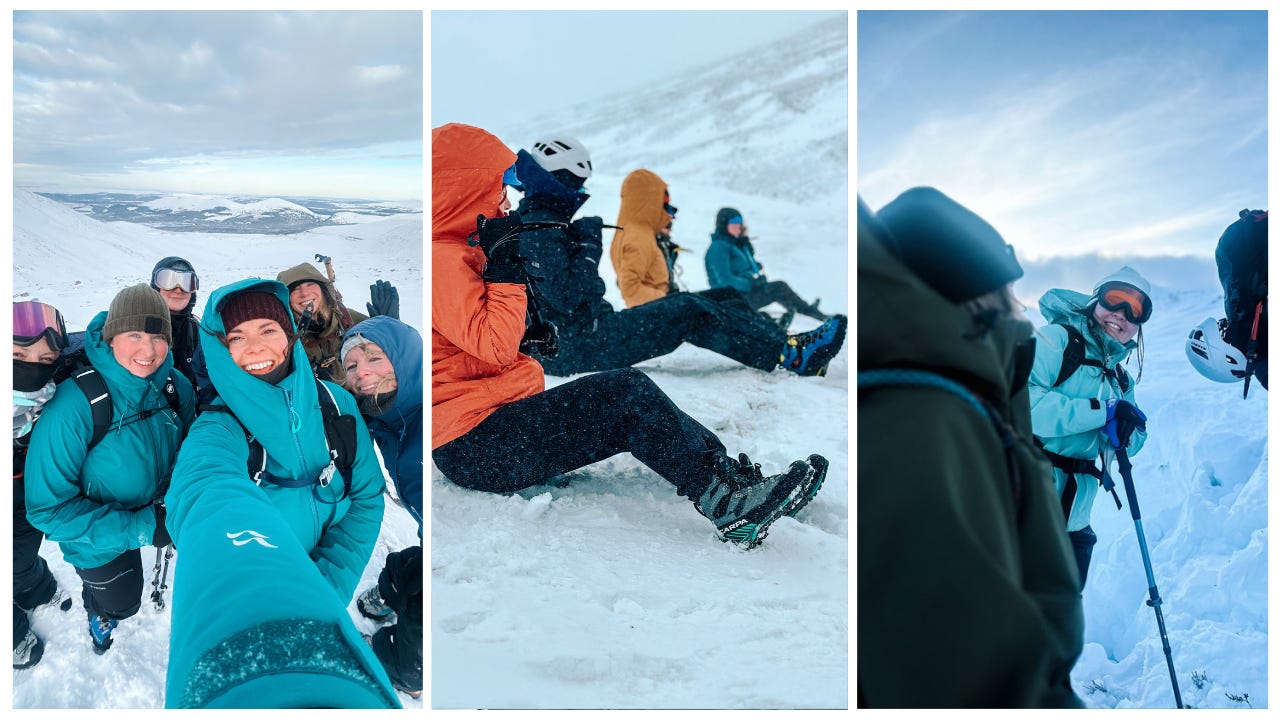
Myth #1: “You need expensive, specialist gear.”
This is one of the biggest barriers for beginners. People imagine they need £600 jackets and crampons before they can go anywhere.
The truth: You can get started with far less.
What you actually need to spend money on:
Sturdy footwear with good grip
If you’re serious about getting into winter mountaineering you’ll want to invest in crampon compatible boots. Winter boots have a stiffer sole, more insulation and have the ability to attach crampons to the bottom. Try on several pairs to see what fits your foot best. For me my Scarpa Manta B2’s are the comfiest boots I own!
Layers you can add/remove
It’s the same rules for winter as for summer… layers are key! You don’t need to fork out on fancy brands, just have a selection of layers made of either merino or synthetic fibres (avoid cotton). I usually wear a merino base layer, a thicker zip up layer with a hood, a thin synthetic layer and a waterproof shell (plus a couple of extra layers in my bag as I get really cold).
Spare gloves and a warm hat
Ever heard ‘if your feet are cold, put a hat on’? It’s so true! Keeping your head warm will make life much more enjoyable. I have hit the jackpot with this beanie, so much so I’ve bought it 3 times (because I keep leaving it in pubs after hikes. It’s waterproof, windproof and hella warm)! Gloves are a non negotiable, you need the use of your hands but the likelihood is they will get wet so take spare pair with you! There’s no perfect suggestion here, I’ve been hiking for years now and I’m still trying to figure out the best glove combo for me.
A headtorch
Winter = shorter days. Don’t get caught out benighted (caught out by darkness) without a light source. In the cold batteries drain quicker so make sure you have definitely packed those spare batteries or even better an entire spare head torch. Don’t be afraid to invest in this, I own the Petzl Swift and it’s been worth it’s weight in gold - which come to think about it isn’t that much. This goes for phones too, you can’t rely on your battery to last so take a battery pack too.
Affordable microspikes for icy path
Microspikes are amazing! On an icy path they will give you so much confidence in your steps. They are cheap to pick up, easy to carry and an invaluable piece of kit.
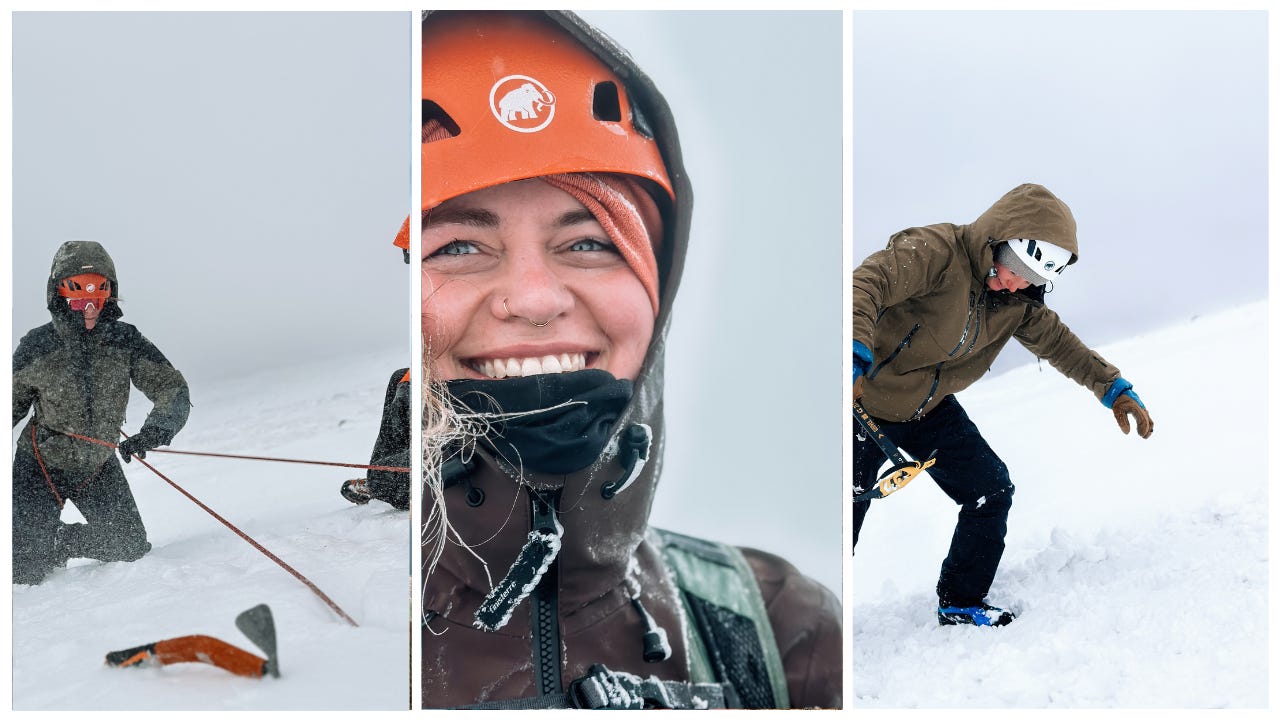
The exciting fancy stuff like ice axes, helmets and crampons only become relevant if you choose to progress to steeper terrain which is where a winter skills course is a valuable investment to keep increasing the fun and challenge of the winter season! Even so you don’t have to fork out for these and can often rent them from outdoor stores pretty cheap!
Myth #2: “Winter hiking is dangerous unless you’re experienced.”
Winter can be dangerous if you head out unprepared… but beginners can absolutely hike safely with the right knowledge.
A huge amount of winter safety comes from understanding:
how to assess the weather
how to recognise changing conditions
how to move on snow and ice
when to turn back (I’ve been here and you have to not let ego get the better of you)
how to make conservative decisions
These are teachable. They’re learnable. And you don’t need years of mountaineering behind you.
Myth #3: “Navigation is impossible in winter.”
It’s not impossible but it is different.
Snow can hide obvious paths and features that you can use as visual loci in summer so you will use a map, compass & terrain clues more in winter. Additionally, once you start getting into more advanced terrain in the mountains there are more safety considerations such as avalanches, seracs, and cornices that you need to be aware of plus the obvious additional factor of more volatile weather and poor visibility to be prepared for too.
It’s important to be prepared for the level at which you’re hiking. On flat, low lying ground, well trafficked ground the risks are minimal and once you understand a few simple techniques up in the mountains, it actually becomes incredibly empowering, because you decide where to go, not the footprints in front of you.
Okay — So What Should Beginners Focus On?
Here’s 5 pieces of advice that I either learnt the hard way or wish I’d known which are genuinely useful tips that will keep you safe and confident, even as a winter newcomer:
1. Start with small, familiar routes.
Get comfortable with your gear. Winter boots and your layering system (just a fancy way of saying which layers you take to dress), walking in microspikes and even carrying a bigger heavier backpack all feel different so go try them out of a shorter, easier route before tackling bigger objectives.
2. Layer for temperature changes.
You shouldn’t be sweating… that leads to chills. Take layers off early as you warm up (remember ‘be bold, start cold’.
3. Pack like you’re going to stop often.
Bring an extra warm layer, snacks, and something hot to drink. Pauses are when you cool down fast, trust me. In winter it’s unlikely you’ll be stopping for long periods so high energy foods you can eat on the go are bomber but if you do stop, chuck a thick layer on and you’ll reap the rewards.
4. Check multiple weather forecasts.
Use MWIS, Met Office, Mountain Forecast and avalanche info if relevant. Winter can change quickly. While we’re at it, be familiar with
5. Turn back early, not late.
The mountains will always be there. Winter rewards caution more than ego. If something doesn’t feel right, turn around.
5. Do a winter skills course
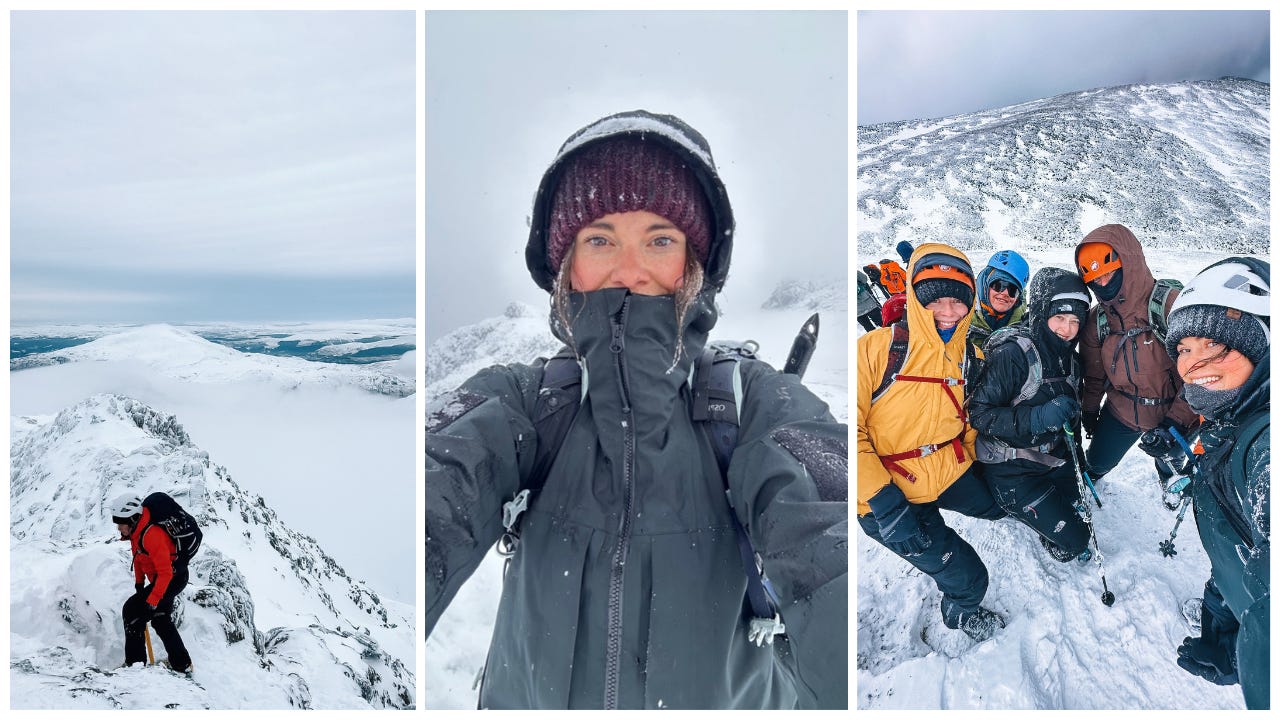
I know this is going to sound like a really poorly executed way of advertising the Made Wild Winter Skills Weekend but I promise you, it’s not. Years ago when I was interested in hiking in winter but had no clue what to do I signed up to a winter skills course in Scotland. It was great! Not only invaluable advice, but the guide leading was SO passionate about the outdoors and it inspired me so much in my journey to being a mountain leader. I honestly would highly recommend as these courses are designed to introduce you to the key areas of hiking in winter and winter mountaineering.
My Bonus Cheat Codes
Here’s a quick fire of my winter hiking cheat codes:
Multiple buffs - they can be used for so much and are light to carry (Go Outdoors usually have them on offer at the till)
Hand warmers - as someone with Reynolds they make all the difference
Start cold. I mentioned this already but no one wants to stop 10 mins in to take layers off already sweating.
Snack constantly - fuel = your body burning energy = you are warmer!
Don’t blindly follow other footprints in the snow. Some people do some weird things.
Lipbalm - Nivea or Carmex for the win!
Scrap the water bladders - the hose will freeze, take a wide mouthed bottle instead.
Sunnies - I love my SunGod Zephyrs all year round.
If You Want to Learn These Skills Hands-On…
The sell out Made Wild Women’s Winter Skills Course is back again in February.
It’s designed specifically for beginners and women who want to feel confident in winter but don’t know where to start but also just a great chance to get out into the mountains and experience the magic of a Scottish winter!
On the course, you’ll learn:
how to move safely on snow and ice
how to use winter tools (ice axe & crampons)
winter navigation basics
how to assess conditions and make good decisions
how to stay warm, safe, and comfortable
Plus, you’ll spend the weekend with a supportive group of women, and warm up in our shared accommodation each evening (plus a cosy post hike pub visit ofc).
When: 13-15 Feb ’26
Where: Cairngorms, Scottish Highlands
How much: £425pp
*includes 2x nights self catered accom, equipment hire and all guiding.
You can check out all the details here!
Ps. If you want to see what to expect check out this YouTube video I made during 2024’s weekend.

I’m not sure how succinct I ended up keeping this (oops), but even if you never join a course, I hope this gives you a little more confidence that winter isn’t just for experts, it’s for anyone willing to learn the basics!
See you in the mountains Crew
Lucy 🩵 x